

Oats vs Millet Cereal vs Granola: Best Breakfast for Indians?

Oats offer the best balance of fibre, blood sugar management, and affordability for daily breakfast. Millet cereal brings genuine nutritional advantages specific to Indian diets, including better mineral content and being naturally suited to India's climate and agriculture. Granola is the most indulgent of the three, often higher in sugar and calories due to added sweeteners and oils, better suited as an occasional treat than an everyday staple. For most people, a rotation between oats and millet cereal, with granola in moderation, makes the most practical sense.
Why This Comparison Matters More in India Than Elsewhere
Breakfast cereal choices carry a slightly different weight in India than in markets where oats and granola originated. Millets, in particular, have seen a genuine national push in recent years, including India's leadership behind the UN's International Year of Millets, precisely because these grains are well suited to Indian growing conditions and traditional diets, unlike oats, which are largely imported or grown in more limited regions.
This makes the oats vs millet vs granola question not just a nutrition comparison, but one that touches on what actually grows well here, what's traditionally been eaten here, and what's been imported as a health trend more recently.
Oats: The Reliable Daily Choice
Oats are a whole grain particularly known for beta-glucan, a soluble fibre that's genuinely well-studied for supporting healthy cholesterol levels and providing steady, gradual energy release rather than a quick spike. They're also among the most versatile breakfast bases, working equally well as a warm porridge or a cold overnight-oats preparation.
Where oats work best:
-
Supporting healthy cholesterol through beta-glucan fibre
-
Steady, sustained energy without a sugar spike
-
Versatile and generally affordable for daily use
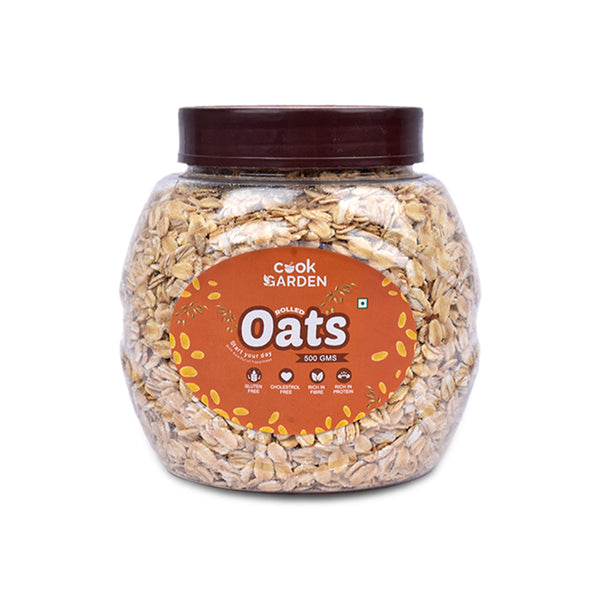
A straightforward option is CookGarden Rolled Oats, high in protein and fibre with no added sugar or preservatives.
Millet Cereal: The Indian-Grown Advantage
Millets, including ragi (finger millet), jowar, and bajra, have been part of Indian diets for thousands of years, long before oats became a wellness trend. Nutritionally, millets tend to offer a strong mineral profile, ragi in particular is notably rich in calcium, and many millets have a lower glycemic index than refined grains, making millet cereal a genuinely solid choice for steady blood sugar management.
Beyond nutrition, millets are naturally drought-resistant and suited to Indian growing conditions, which gives millet cereal a sustainability edge that imported oats simply can't match.
Where millet cereal works best:
-
Strong mineral content, particularly calcium from ragi-based options
-
Naturally suited to Indian agriculture, more sustainable sourcing
-
Generally gluten-free, useful for those with gluten sensitivity
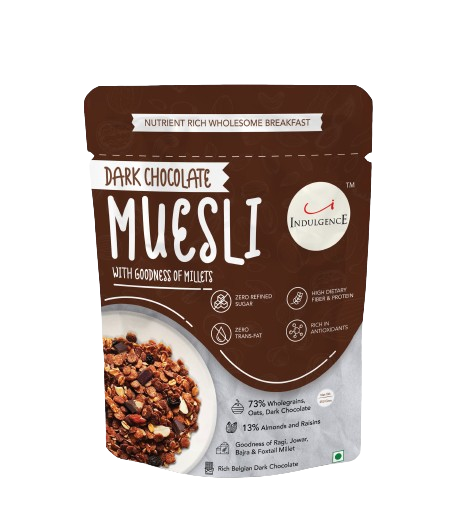
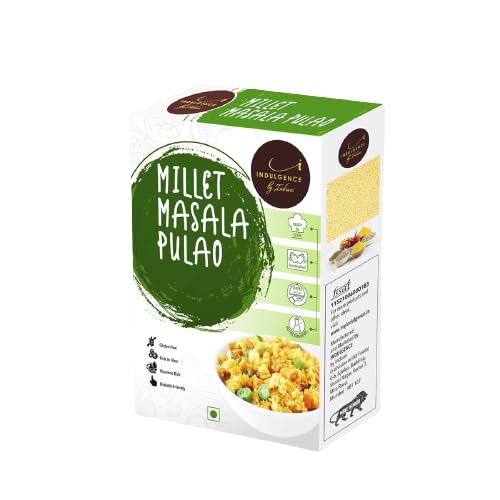
An example is INDULGENCE Dark Chocolate Millet Muesli, high in fibre and protein with no refined sugar, or
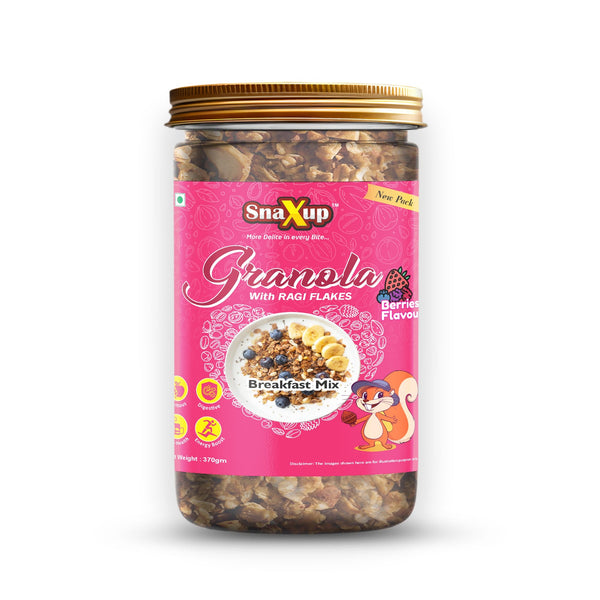
Snaxup Granola with Ragi Flakes, combining ragi with almonds and foxnuts for a fibre-rich, crunchy start to the day.
Granola: Tasty, But Read the Label
Granola is typically oats (or millets) baked with oil and a sweetener until crunchy and clustered. This baking process is exactly why granola, despite starting with genuinely healthy base ingredients, often ends up considerably higher in calories, added sugar, and fat than plain oats or millet flakes, sometimes rivalling a dessert more than a light breakfast.
This doesn't make granola inherently unhealthy, but it does mean it deserves closer label-reading than its "healthy breakfast" branding often suggests, particularly around added sugar content and portion size.
Where granola works best:
-
As an occasional treat or yoghurt topping rather than a daily base
-
When chosen with minimal or naturally sweetened formulas (dates, jaggery rather than refined sugar)
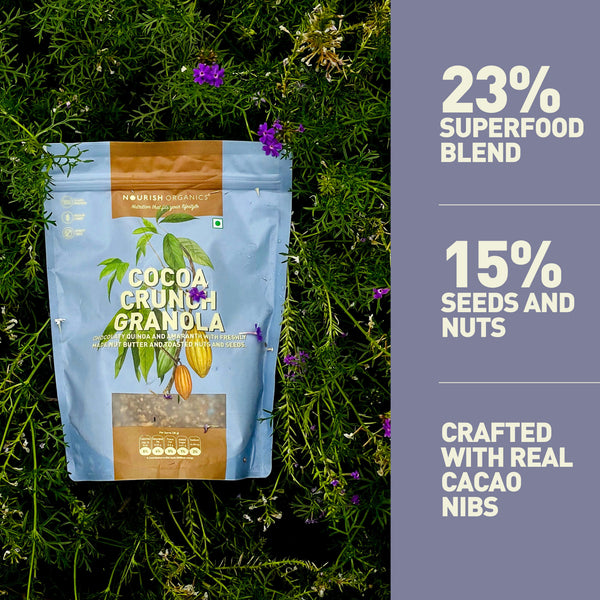
A lower-sugar option is NOURISH ORGANICS Cinnamon Oats Granola, or for a millet-based version,
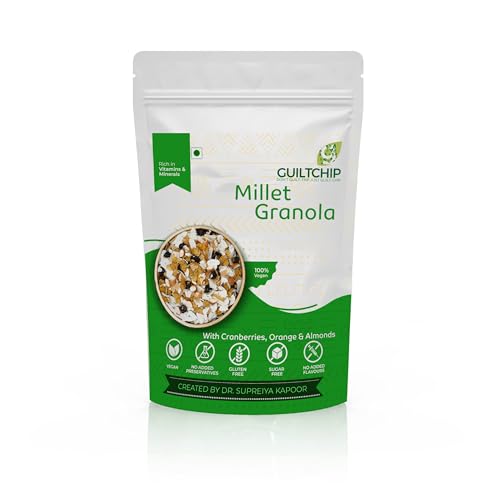
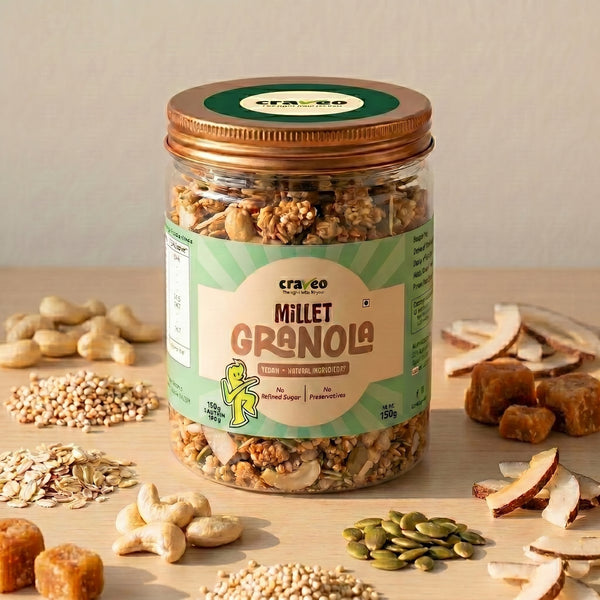
GUILTCHIP Millet Granola with Dates & Almonds, sweetened naturally rather than with refined sugar.
Oats vs Millet Cereal vs Granola: Quick Comparison
|
Factor |
Oats |
Millet Cereal |
Granola |
|
Sugar/calorie density |
Low (plain) |
Low to moderate |
Higher (baked with oil, sweetener) |
|
Key strength |
Cholesterol support (beta-glucan) |
Minerals, gluten-free, sustainable |
Taste and crunch |
|
Best suited for |
Daily breakfast base |
Daily breakfast, blood sugar management |
Occasional treat, topping |
|
Origin fit for India |
Largely imported |
Native to Indian agriculture |
Varies by base grain |
How to Choose for Your Routine
Want the most researched, cholesterol-friendly option? Plain oats, prepared simply.
Want strong mineral content and support for Indian agriculture? Millet-based cereal, especially ragi.
Want a treat-like breakfast occasionally? Granola, ideally a naturally sweetened version, in moderate portions.
Not sure? Rotating between plain oats and millet cereal through the week, with granola reserved for weekends or as a topping, covers most nutritional bases without monotony.
To explore the full range, browse our organic breakfast cereals collection.
Quick Summary
Oats, millet cereal, and granola each bring something different to the breakfast table. Oats offer well-studied, steady daily nutrition; millet cereal brings a genuinely India-specific mineral and sustainability advantage; and granola, while tasty, is best treated as an occasional indulgence rather than an everyday base due to its typically higher sugar and calorie content. A rotation between the three, weighted toward oats and millets, makes for a practical, balanced breakfast routine.
FAQs
Q1. Is millet cereal better than oats for Indians specifically?
Ans: Millets offer some genuine advantages for Indian diets, including strong mineral content and a natural fit with Indian agriculture, but oats aren't worse, just different. Both are excellent daily breakfast choices, and using both gives you a broader nutrient range than relying on just one.
Q2. Is granola unhealthy?
Ans: Not inherently, but it's easy to underestimate its calorie and sugar content, since baking oats or millets with oil and sweetener significantly changes their nutritional profile from the raw grain. Checking the label for added sugar and eating reasonable portions makes granola a fine occasional choice.
Q3. Can diabetics eat oats or millet cereal?
Ans: Both are generally considered diabetes-friendly in moderate portions, since they have a lower glycemic index than refined cereals, with millets sometimes offering an additional edge here. Granola, due to added sugar, needs more careful portion control and label checking for diabetics specifically.
Q4. Which is best for weight loss: oats, millet cereal, or granola?
Ans: Plain oats or millet cereal are generally better suited to weight management goals, since they're lower in calories and added sugar than most granola. If choosing granola, a smaller portion size and a naturally sweetened formula help keep it aligned with weight loss goals.
Q5. Is ragi cereal good for children?
Ans: Yes, ragi is traditionally recommended in Indian households for children specifically due to its high calcium content, supporting healthy bone development. It's a genuinely good option for a growing child's breakfast routine, alongside other nutrient sources.
Q6. Can I combine oats, millet cereal, and granola in one bowl?
Ans: Yes, many people mix a base of plain oats or millet flakes with a smaller portion of granola for added crunch and flavour, which balances granola's higher sugar content against the lighter base. This is a practical way to enjoy all three without relying on granola alone.


