

Soy Wax Candles vs Paraffin Candles: Which is Healthier for the Home?

Soy wax candles are generally the healthier choice for indoor air quality, since they're made from a renewable plant oil and burn cleaner, with less soot and fewer potentially harmful compounds released compared to paraffin. Paraffin, a petroleum byproduct, can release more soot and, depending on additives and fragrance load, more volatile organic compounds (VOCs) when burned. Neither candle type is entirely risk-free, since any burning material releases some particulate matter, but soy wax candles are the more consistently recommended option for regular, indoor use.
Why the Wax Actually Matters, Not Just the Scent
Most people choose candles based on scent and ambience, and rarely think about what the wax itself is made from. But candle wax is a material you're burning indoors, often in a closed room, sometimes for hours, which makes the base material genuinely relevant to indoor air quality, not just a minor detail.
The two most common wax types, paraffin and soy, come from completely different sources and burn quite differently, which is where the real distinction lies.
What Paraffin Wax Actually Is
Paraffin wax is a byproduct of petroleum refining, the same broad process that produces fuels like gasoline and diesel. It's the most widely used candle wax globally, largely because it's inexpensive, holds fragrance and colour well, and has a long production history.
When burned, paraffin candles can release more soot than plant-based alternatives, visible as the black residue sometimes seen on candle jars or nearby walls over time. Some studies have also found that paraffin candles can release higher levels of certain volatile organic compounds, particularly when combined with synthetic fragrances, though the actual health impact depends heavily on frequency of use, ventilation, and room size.
Where paraffin candles still hold appeal:
-
Generally more affordable than natural wax alternatives
-
Strong scent throw, since paraffin holds fragrance oils effectively
-
Widely available in a huge range of colours and finishes
What Soy Wax Actually Is
Soy wax is made from hydrogenated soybean oil, a renewable, plant-based source rather than a petroleum byproduct. This fundamental difference in origin carries through to how it burns: soy wax typically burns cooler and slower than paraffin, which generally means less soot production and a longer-lasting candle from the same amount of wax.
Because soy wax is biodegradable and water-soluble, it's also considerably easier to clean up if spilled, and the renewable, plant-based sourcing aligns with a lower environmental footprint compared to a petroleum-derived product.
Where soy wax candles stand out:
-
Cleaner burn with generally less soot and fewer VOCs
-
Renewable, biodegradable, plant-based sourcing
-
Slower, longer burn time compared to paraffin of the same size
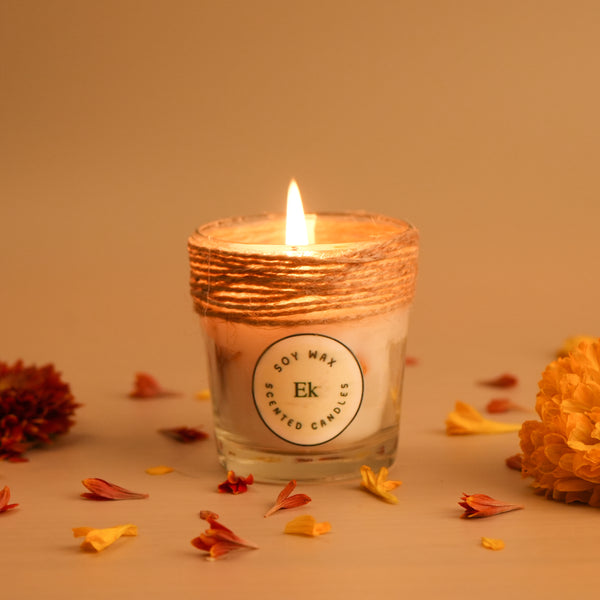
An example is Cahree Wellness Rose & Jasmine Luxury Soy Wax Candle, hand-poured with 100% natural soy wax in a reusable glass jar for a clean, even burn.


Soy Wax vs Paraffin: Quick Comparison
|
Factor |
Paraffin Wax |
Soy Wax |
|
Source |
Petroleum byproduct |
Renewable soybean oil |
|
Soot production |
Generally higher |
Generally lower |
|
Burn time |
Shorter, burns faster |
Longer, burns slower |
|
Cleanup |
Harder to remove |
Water-soluble, easier cleanup |
|
Biodegradability |
Not biodegradable |
Biodegradable |
Does the Fragrance Matter More Than the Wax?
In many cases, yes, at least partially. Synthetic fragrance oils, regardless of the wax base, can be a significant source of the volatile organic compounds released when a candle burns. This means a soy candle with heavy synthetic fragrance isn't automatically "cleaner" than a well-made paraffin candle, the wax type is one factor among several, alongside fragrance quality and wick material.
For the cleanest possible burn, it's worth looking at the whole picture: natural wax, natural or essential oil-based fragrance, and a lead-free wick (most modern candles use cotton wicks, but it's worth confirming for older or unbranded candles).
For a naturally scented option, Ecokari Soothing Sandalwood Urli Scented Soy Candle combines pure soy wax with a grounding sandalwood scent.
To explore the full range, browse our organic candles and candle melts collection.
Is Switching to Soy Wax Worth It?
You burn candles regularly, in a closed room: Soy wax is the more sensible everyday choice for indoor air quality.
You want a stronger, longer-lasting scent throw: Paraffin still has an edge here, though many quality soy candles perform well too.
You're sensitive to smoke or soot, or have respiratory concerns: Soy wax candles are generally the gentler choice, alongside good ventilation.
You care about sustainability and biodegradability: Soy wax is the clear winner here as a renewable, plant-based material.
Quick Summary
Soy wax candles are generally the healthier, cleaner-burning choice for home use, thanks to their plant-based origin, lower soot production, and biodegradability, compared to petroleum-derived paraffin. That said, fragrance quality matters just as much as wax type, so a well-made candle with natural or essential oil-based scent, regardless of wax, tends to burn cleaner than a heavily synthetic-scented one. For regular indoor use, soy wax is the more consistently recommended option.
FAQs
Q1. Is paraffin wax dangerous to breathe?
Ans: Occasional use in a well-ventilated space is generally not considered a major health risk, but paraffin candles can release more soot and certain VOCs than plant-based alternatives, especially with heavy or frequent use in poorly ventilated rooms. Good ventilation reduces this concern regardless of wax type.
Q2. Do soy candles smell as strong as paraffin candles?
Ans: It can vary. Paraffin traditionally holds fragrance oils slightly better, giving a stronger "scent throw," but well-formulated modern soy candles have closed much of this gap and can offer a genuinely satisfying scent experience.
Q3. Are all soy candles automatically non-toxic?
Ans: Not automatically, since the fragrance oils and wick material used also matter significantly. A soy candle with heavy synthetic fragrance can still release notable VOCs, so it's worth checking for natural fragrance and a cotton (not metal-core) wick for the cleanest overall burn.
Q4. Why does soy wax burn slower than paraffin?
Ans: Soy wax has a lower melting point and burns cooler than paraffin, which generally translates to a slower, longer-lasting burn from the same amount of wax. This is one of the practical, everyday advantages of soy candles beyond air quality considerations.
Q5. Can soy wax candles trigger allergies or sensitivities?
Ans: Soy wax itself is generally well-tolerated, though individuals with soy allergies should be aware, even though topical or inhaled exposure from a candle is quite different from ingesting soy. As with any candle, fragrance sensitivity is usually a bigger factor than the wax base itself.
Q6. Is it worth paying more for soy wax candles?
Ans: For regular, everyday use in living spaces, many people find the cleaner burn, longer burn time, and biodegradability worth the typically higher price. For occasional or decorative use, the difference matters less, though soy remains the generally preferred choice when air quality is a priority.


