

What Is Vijaya Leaf Extract? A Beginner's Guide to Cannabis-Based Wellness Products

Vijaya leaf extract is derived from the leaves of the Cannabis sativa plant and is the Ayurvedic and Sanskrit name for cannabis leaf used in traditional Indian medicine. Unlike the flowering tops or resin of the plant, which are regulated as narcotics, cannabis leaf extract falls under a separate legal category in India and is used in Ayurvedic wellness products for pain relief, relaxation, and skincare, typically formulated to be non-psychoactive or minimally psychoactive.
Where the Name "Vijaya" Comes From
Vijaya, meaning "victorious" in Sanskrit, is one of several traditional names for cannabis referenced in classical Ayurvedic texts, including the Charaka Samhita, where it was described as a plant used to support calm, digestion, and relief from everyday discomfort. This isn't a new or trend-driven ingredient; it reflects a genuinely old thread in Indian herbal medicine that has re-emerged commercially in recent years as cannabinoid-based wellness products have gained wider acceptance.
Vijaya Leaf vs the Cannabis Flower: An Important Distinction
This is the single most important thing to understand before anything else. Cannabis sativa has different parts, and Indian law treats them very differently:
-
The flowering tops and resin (ganja and charas) contain higher concentrations of THC, the psychoactive compound, and are strictly regulated as narcotics under the Narcotic Drugs and Psychotropic Substances (NDPS) Act, 1985
-
The leaves and seeds of the plant are explicitly excluded from the NDPS Act's definition of prohibited cannabis, which is the legal basis on which Vijaya leaf extract products are manufactured and sold
-
Products made from Vijaya leaf are generally formulated with low or negligible THC, focusing instead on other cannabinoids like CBD, CBG, and CBN, which are non-psychoactive or far less psychoactive than THC
In short: Vijaya is not the same as recreational marijuana, and understanding this distinction is central to understanding why these products exist as a legitimate wellness category in India at all.
The Legal Basis for Vijaya Products in India (In Plain Terms)
Cannabis regulation in India isn't a simple "legal" or "illegal" answer; it depends on which part of the plant is used and how the product is manufactured and sold:
-
The NDPS Act specifically excludes leaves and seeds from its prohibited cannabis definitions, which is why leaf-based products can exist commercially at all
-
Many Vijaya-based Ayurvedic formulations are manufactured under licences issued by the Ministry of AYUSH or under the Drugs and Cosmetics Act, 1940, rather than as unregulated wellness products
-
Some manufacturers also operate under state-level Excise licences specifically for cannabis leaf use, since certain aspects of cannabis leaf regulation sit with individual states rather than purely central law
-
Rules and enforcement can vary by state, and oral formulations in particular often require or recommend a doctor's prescription, even when the base ingredient itself is legally permitted
This is genuinely nuanced regulatory territory, and it's worth treating it that way rather than assuming a blanket answer. If legal clarity for your specific situation matters, that's a question for a qualified professional rather than general information.
What Vijaya Leaf Extract Is Actually Used For
In current Indian wellness products, Vijaya leaf extract commonly appears in:
-
Topical pain relief oils and roll-ons, aimed at muscle soreness, joint discomfort, and stiffness
-
Massage oils positioned for relaxation and stress relief
-
Skincare formulations, sometimes combined with other Ayurvedic ingredients for skin repair and radiance
-
Aromatherapy blends targeting sinus congestion or general wellness, often combined with other essential oils like eucalyptus or lemongrass
Topical formats, oils, roll-ons, and massage blends, are currently the most common category of Vijaya products available in the general wellness market, generally requiring less regulatory complexity than oral or ingestible cannabinoid products.
A Real Example: Topical Pain Relief
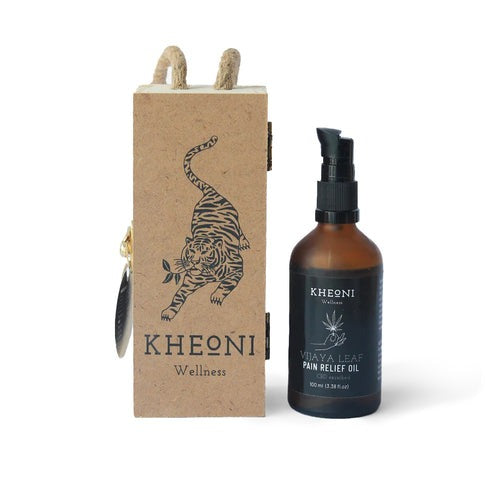
Suspire's Vijaya Leaf Pain Relief Oil is a practical illustration of how this ingredient is typically formulated for everyday use, combined with a blend of traditional Ayurvedic ingredients like ginger, clove, and eucalyptus, and marketed for muscle soreness, joint stiffness, and general tension. It's positioned as a topical, non-sticky formula meant for direct application to the affected area, rather than an ingestible product, which reflects the broader pattern of how most beginner-accessible Vijaya products enter the market.
A Real Example: Roll-On Convenience
For a simpler, on-the-go option, a Vijaya Leaf Roll-On offers the same category of topical relief in a smaller, more portable format, useful for spot application to a specific area without needing to massage in a larger volume of oil.
How These Products Are Typically Marketed
It's worth being aware that many Vijaya product listings use strong, confident language, terms like "instant relief," "29 types of cannabinoids," or references to ancient healing traditions. Some of this reflects genuine traditional use and formulation detail, but as with any wellness category, specific efficacy claims made by individual brands are marketing statements from that manufacturer, not independently verified medical claims. It's reasonable to take the traditional-use context seriously while still applying the same scrutiny you would to any wellness product's specific promises.
Who Should Be Cautious or Seek Medical Guidance First
A few groups should be particularly thoughtful before using Vijaya-based products, and ideally consult a doctor or qualified Ayurvedic practitioner first:
-
Pregnant or breastfeeding individuals, given limited research on cannabinoid exposure in these groups
-
Anyone currently on prescription medication, since cannabinoids can interact with certain drugs
-
Those with known sensitivities to essential oils or botanical extracts, particularly for topical products combining multiple active ingredients
-
Anyone considering an oral or ingestible cannabinoid product specifically, where dosage and legal requirements (including possible prescription needs) are more significant than for topical use
How to Approach Trying a Vijaya Product for the First Time
If you're new to this category, a few sensible starting habits:
-
Start with a topical product rather than an oral or ingestible one, since topical use generally carries fewer regulatory and dosing complexities for beginners
-
Patch test on a small area of skin first, particularly if the formulation combines Vijaya with other essential oils you haven't used before
-
Check that the brand is transparent about sourcing and formulation, rather than relying purely on traditional-use language without any specific ingredient detail
-
Don't assume a product is "fully legal" or "fully illegal" based on a single online claim, the actual regulatory picture depends on the specific formulation, plant part used, and applicable state rules
Quick Summary
Vijaya leaf extract is the Ayurvedic name for cannabis leaf, a distinct part of the Cannabis sativa plant from the flowering tops and resin that are regulated as narcotics under Indian law. Leaf-based Vijaya products are typically formulated with low or negligible THC and are most commonly found in topical pain relief and wellness formats. The regulatory picture is genuinely nuanced rather than a simple yes-or-no answer, so approaching Vijaya products with informed caution, starting with topical formats, checking brand transparency, and consulting a professional for anything beyond general topical use, is a sensible way to explore this category.

FAQs
1. Is Vijaya leaf extract the same as marijuana?
Ans: No. Vijaya leaf extract comes from the leaves of the cannabis plant, which are legally distinct from the flowering tops and resin (commonly associated with marijuana) that are regulated as narcotics under Indian law.
2. Will Vijaya leaf extract get me high?
Ans: Generally, no. Most Vijaya leaf products are formulated with low or negligible THC content, the primary psychoactive compound, and are typically positioned as non-psychoactive wellness products rather than recreational ones.
3. Is it legal to buy Vijaya leaf products in India?
Ans: Cannabis leaves and seeds are excluded from the NDPS Act's prohibited definitions, and many Vijaya products are manufactured under Ayurvedic or Ayush licensing frameworks. That said, rules can vary by state and product type, so it's not a simple universal yes for every product or format.
4. Do I need a prescription to buy Vijaya products?
Ans: This depends on the specific product and format. Topical products are generally more accessible, while oral or ingestible cannabinoid formulations more often require or recommend a doctor's prescription, given more significant dosing considerations.
5. What's the difference between Vijaya leaf extract and hemp seed oil?
Ans: Hemp seed oil is derived from the seeds of the plant and typically contains no meaningful cannabinoid content, making it a different, generally unregulated category. Vijaya leaf extract comes from the leaves and does contain cannabinoids, placing it under a different regulatory pathway.
6. Are Vijaya-based topical products safe for daily use?
Ans: Many are formulated for regular topical application, but individual sensitivity varies, particularly with multi-ingredient formulas. Patch testing before regular use and checking with a doctor if you have any underlying skin conditions or sensitivities is a sensible precaution.


