

Rajgira Atta Benefits: Everything You Need to Know Before Adding It to Your Diet

Rajgira atta, made from amaranth grain, is naturally gluten-free, rich in protein, and packed with calcium and iron, making it a genuinely useful flour for people managing fasting diets, gluten sensitivity, or simply looking to diversify their grain intake. It has a slightly nutty taste and works best mixed with other flours for everyday cooking.
What Is Rajgira Atta, Exactly
Rajgira is the Hindi name for amaranth, an ancient grain that's technically a pseudo-cereal rather than a true grain, similar to quinoa in that sense. Rajgira atta is simply amaranth seeds ground into flour, commonly used during religious fasting periods in India, but increasingly popular as a nutrition-forward flour choice year-round.
Nutritional Profile: What's Actually in It
Rajgira atta stands out among traditional flours for a few specific nutrients:
-
Higher protein content than wheat flour, including a favourable amino acid profile
-
Naturally gluten-free, safe for people with gluten sensitivity or celiac disease
-
Good source of calcium, useful for bone health alongside dairy or other calcium sources
-
Contains iron and magnesium, relevant for energy metabolism
-
Higher fibre content than refined wheat flour, supporting digestion
Health Benefits Worth Knowing of Rajgira Atta
Beyond the basic nutrition label, a few specific benefits come up often when people talk about rajgira:
-
Supports a gluten-free diet without sacrificing protein content, unlike many gluten-free flour substitutes
-
May help manage blood sugar response better than refined wheat flour, due to its fibre and protein combination
-
Contributes to bone health through its natural calcium content
-
Fits well into fasting diets (vrat) common in Indian households, since it's traditionally accepted during religious fasts
How to Use Rajgira Atta in Everyday Cooking
Rajgira atta has a denser texture and slightly nutty, earthy flavour compared to wheat flour, which means it works best in specific applications rather than as a straight one-to-one wheat replacement:
-
Puri and paratha, a traditional and reliable use, especially during fasting
-
Mixed with other gluten-free flours (like buckwheat or rice flour) for better texture in rotis
-
Thickening agent for soups, kheer, or porridge
-
Small proportion blended into regular atta for added nutrition without changing texture too much
A Practical Starting Point
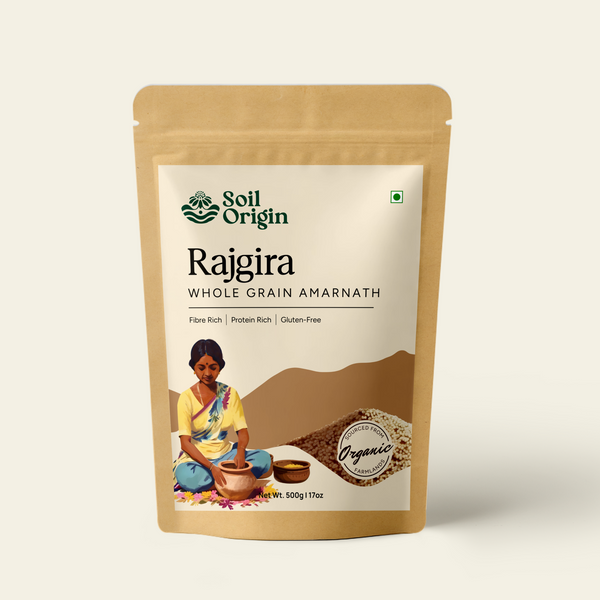
If you're trying rajgira for the first time, starting with a whole-grain rajgira flour and blending it into familiar recipes, a paratha mix, or a thickener for kheer is an easier entry point than switching your entire flour supply at once. It lets you get used to the flavour and texture before deciding how much of a role it should play in your regular cooking.
Rajgira vs Other Gluten-Free Flours
Rajgira is often compared to other gluten-free flours like buckwheat (kuttu), water chestnut (singhara), or rice flour, especially since several of these overlap during fasting periods. Compared to most of these, rajgira stands out for its notably higher protein content and calcium levels, though it has a denser texture that some people find less versatile than lighter flours like rice flour. Buckwheat tends to have a stronger, more distinct flavour, while rajgira is comparatively milder and easier to blend into a wider range of recipes.
Buying and Choosing Quality Rajgira Atta
Not all rajgira atta is processed the same way, and a few checks help ensure you're getting a genuinely good product:
-
Check that it's stone-ground or minimally processed where possible, since this tends to preserve more nutrients
-
Look for a fine, consistent texture without visible impurities or husk remnants
-
Smell it before use; fresh rajgira atta has a mild, nutty aroma; a sharp or musty smell suggests it's gone rancid
-
Buy in smaller quantities if you don't use it often, since whole-grain flours have a shorter shelf life than refined ones
Who Benefits Most From Rajgira Atta
Rajgira atta is particularly useful for people managing gluten sensitivity, those observing traditional fasting periods, and anyone looking to add more plant-based protein and micronutrients to their diet without relying entirely on wheat-based staples. It's not necessarily meant to fully replace wheat flour for most households, but rather to be part of a more varied grain rotation.
Things to Keep in Mind
A few practical notes before making rajgira atta a regular part of your kitchen:
-
It has a denser texture, so recipes may need slight adjustments in water or binding ingredients
-
Store in an airtight container, since whole-grain flours can turn rancid faster than refined ones
-
Introduce gradually if you're not used to denser, fibre-rich flours, to let your digestion adjust
Quick Summary
Rajgira atta offers a genuinely useful nutritional profile: gluten-free, high in protein, calcium, and iron, making it a smart addition to a varied diet, especially for fasting periods or gluten-sensitive cooking. It works best blended into familiar recipes rather than as a complete wheat flour replacement.
FAQs
1. Is rajgira atta good for weight loss?
Ans: It can support weight management goals due to its higher protein and fibre content, which helps with satiety. It isn't a standalone weight-loss solution, but it's a nutritious addition to a balanced diet.
2. Can diabetics eat rajgira atta?
Ans: Rajgira's fibre and protein content may help moderate blood sugar response compared to refined wheat flour, but individual response varies. It's worth discussing specific dietary changes with a doctor if managing diabetes.
3. Is rajgira atta the same as amaranth flour?
Ans: Yes, rajgira is the Hindi name for amaranth, so rajgira atta and amaranth flour refer to the same product made by grinding amaranth seeds.
4. Can I use rajgira atta for daily rotis?
Ans: It's possible, though its dense texture works better blended with other flours rather than used alone for everyday rotis. Many people use it primarily during fasting periods or in specific recipes like puri.
5. Does rajgira atta have a strong taste?
Ans: It has a mild, nutty, slightly earthy flavour that's noticeable but not overpowering, especially when blended with other flours in a recipe.
6. How should rajgira atta be stored?
Ans: Store it in an airtight container in a cool, dry place, since whole-grain flours like rajgira can turn rancid faster than refined wheat flour if exposed to air and moisture.


