Best Organic Baby Night Suits & Clothing in India

The best organic baby night suits in India are made from GOTS-certified organic cotton, dyed with azo-free colours, and finished without formaldehyde or synthetic resins. Since night suits sit against skin for 8+ hours, breathable, unbleached cotton with soft flat seams is generally the safest and most comfortable choice for infants and toddlers.
Why Sleepwear Deserves More Attention Than Daywear
A night suit spends more consecutive hours against a baby's skin than almost anything else they wear. That single fact is why many parents who are casual about daywear fabric become much more particular about what their child sleeps in - sweat, warmth, and prolonged contact all increase how much of a fabric's finish gets absorbed through the skin overnight.
Babies also have a naturally more permeable skin barrier than adults, especially in the first year, so residue from harsh dyes or synthetic finishes has more chance to cause irritation over a full night than it would during a few hours of daytime wear.
What GOTS and OEKO-TEX Labels Actually Tell You
These two certifications get used interchangeably, but they check different things.
GOTS (Global Organic Textile Standard) is a supply-chain certification - it verifies that the cotton was grown organically and processed without harmful chemicals at every stage, from farm to finished garment, and that labour standards were met along the way.
OEKO-TEX Standard 100 is a finished-product test - it checks the completed garment, including threads, buttons, and prints, against a list of restricted substances. Class I, the strictest tier, is reserved specifically for baby and infant products.
A night suit carrying both labels has been checked on two different fronts: how it was grown and made, and what's actually left in the finished fabric. If you can only find one, OEKO-TEX Class I is the more directly relevant check for something worn overnight.
Reading a Baby Sleepwear Label
Beyond certification marks, a few practical checks matter:
-
Fabric composition - pure or majority cotton breathes better overnight than poly blends.
-
Dye type - azo-free dyes are the safer standard; if a listing doesn't mention this, it's worth asking.
-
Seam finish - flat or covered seams reduce friction against sensitive skin during sleep.
-
Fit - sleepwear that's too snug around the neck or too loose (with drawstrings) can be a safety concern for infants; footed, close-fitting styles are generally recommended for younger babies.
Choosing by Season and Age
-
Newborn–6 months: Lighter, unbleached cotton, footed or full-coverage styles, minimal prints/dyes near the neckline.
-
6 months–2 years: Breathable cotton night suits with easy front or shoulder snaps for quick changes.
-
2–5 years: Can move toward printed cotton styles, provided the print/dye is still azo-free and the fabric stays breathable.
A Few Organic Night Suits Worth Considering
Suspire's Adya range covers a wide set of printed cotton night suits for toddlers and young kids, alongside a dedicated baby loungewear collection for younger infants:
-
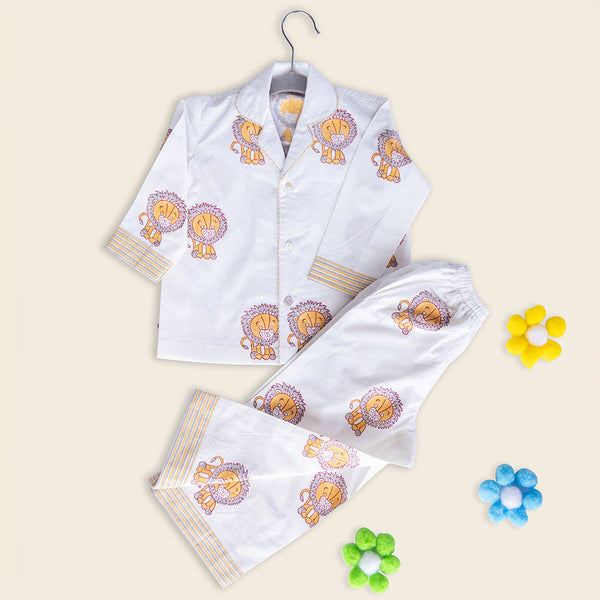
A soft, printed cotton night suit works well as a first "fun" sleepwear option once a toddler is past the newborn stage and enjoying character or animal prints.
-
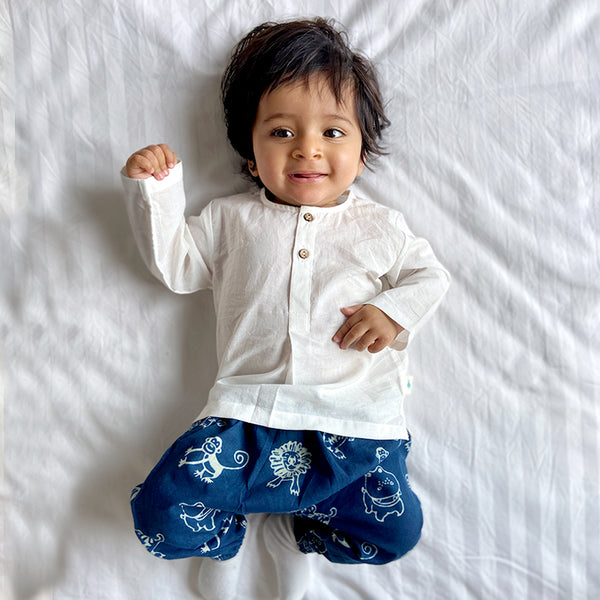
For daytime-to-evening wear that isn't strictly sleepwear, the baby kurta and baby dresses ranges offer a breathable cotton alternative for warmer evenings.
Quick Summary
-
Look for GOTS certification (how it was made) and OEKO-TEX Class I (what's in the finished product) - together they're the most complete check.
-
Pure or majority cotton, azo-free dyes, and flat seams matter most for anything worn overnight.
-
Match fit to age: closer-fitting, footed styles for younger infants; looser cotton night suits from toddler age onward.
-
A certification label alone isn't proof - check the actual fabric composition listed on the product page too.
A Trusted Place to Start
Sleepwear is one of those categories where "organic" needs to actually mean something, not just sound good on a tag. Suspire curates GOTS and OEKO-TEX-aware organic cotton sleepwear and everyday clothing for babies and toddlers, so a good night's sleep doesn't come with a compromise on skin safety.
FAQs
Q. What's the difference between GOTS and OEKO-TEX for baby clothes?
Ans: GOTS certifies the entire production process - organic farming through to the finished garment. OEKO-TEX Standard 100 tests the finished product itself for harmful substances, with Class I being the strictest tier for baby items. Ideally, sleepwear carries both.
Q. Is 100% cotton always the best choice for baby night suits?
Ans: For most babies, yes - cotton breathes well and reduces overheating risk during sleep, which matters more overnight than during the day. Always check that it's also organically grown and safely dyed, since "cotton" alone doesn't guarantee it's chemical-free.
Q. How often should baby night suits be replaced?
Ans: Replace them once they no longer fit comfortably or the fabric has thinned and lost softness, generally every few months for fast-growing infants. Watch for loose threads or stretched-out necklines, which can affect both comfort and safety.
Q. Are printed night suits as safe as plain ones?
Ans: They can be, as long as the print uses azo-free, tested dyes - this isn't guaranteed by print alone, so check the product description or certification. If in doubt, plain or lightly printed styles are a safer default for very young infants.
Q. What should I avoid in baby sleepwear?
Ans: Avoid synthetic blends that trap heat, tight elastic at the neck or wrists, loose drawstrings, and any sleepwear with an unclear or missing certification on fabric safety. For infants, footed or fitted styles are generally safer than loose, flowing cuts.