

Best Non-Toxic Educational Toys in India (2026)

The best non-toxic educational toys in India are made from solid wood or certified food-grade materials, carry BIS certification for the domestic market (or EN71/ASTM F963 for imported toys), and are finished with water-based, non-toxic paint. Shape sorters, puzzles, lacing toys, and stacking sets are reliable picks across most toddler ages.
Why "Educational" and "Non-Toxic" Need to Be Checked Separately
It's easy to assume a toy labelled "educational" is automatically safe, but the two claims are unrelated - one is about developmental value, the other about materials and manufacturing. A wooden shape sorter can be genuinely educational and still use a paint finish you wouldn't want a teething toddler chewing on. Many parents shopping for toddlers today are learning to check both boxes separately rather than trusting a single word on the packaging.
What "Non-Toxic" Actually Means on a Toy Label
In India, toys are required to carry BIS (Bureau of Indian Standards) certification, which involves mechanical, chemical, and flammability testing and checks age-appropriateness for children under and over 36 months. Toys sold internationally often also carry EN71 (the European standard) or ASTM F963 (the US standard) — both test specifically for things like lead in paint, sharp edges, and choking-hazard-sized parts.
Practically, this means: look for a BIS or ISI mark on Indian-made toys, and for imported pieces, check whether the listing mentions EN71 or "child-safe certified." A vague "non-toxic" claim with no certification behind it is worth a second look.
Wood, Plastic, or Silicone - What Suits Which Age
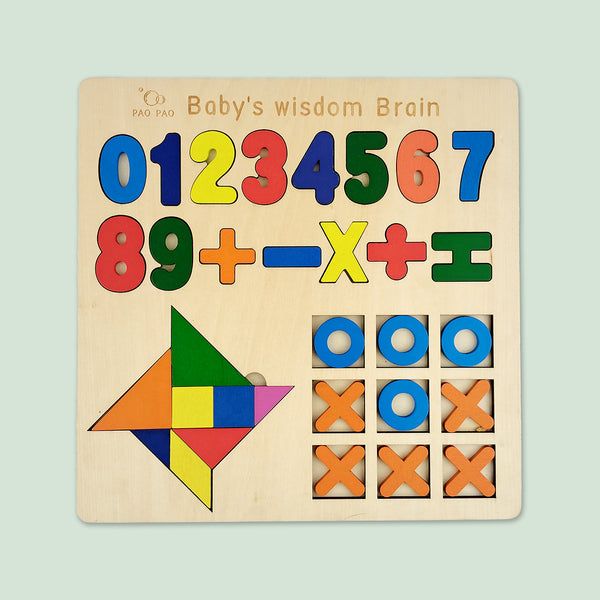
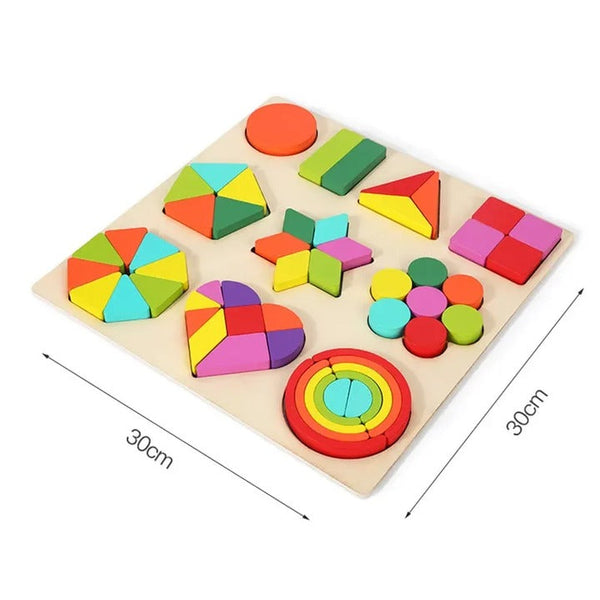
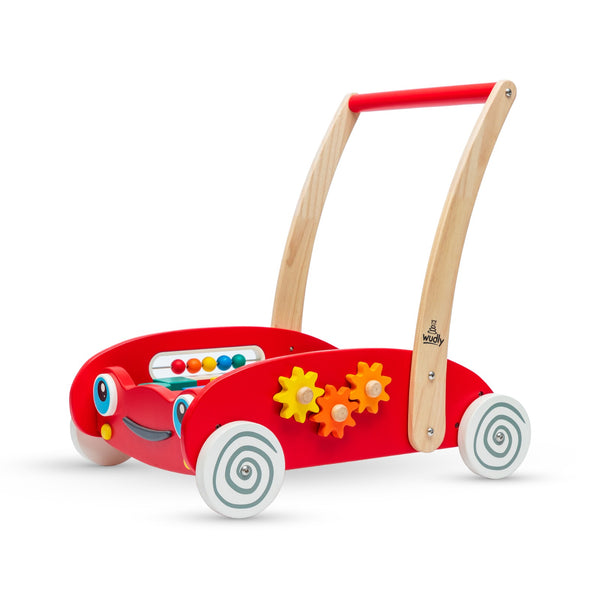
Solid wood toys (shape sorters, stacking blocks, puzzles) are a strong default for toddlers - they're sturdy, don't hold odours the way some plastics can, and tend to last through multiple children if well made. Check that any paint or varnish is specifically labelled non-toxic and water-based.
Silicone and food-grade plastic toys work well for the youngest age group (under 12 months) who mouth everything, since they're easy to sanitise and don't splinter.
Magnetic and small-part toys (mazes, bead sorters) are educational for fine motor skills but need an age check — anything with small magnets or beads should be kept for children old enough not to put them in their mouth, typically 3+.
Choosing by Developmental Stage
-
1–2 years: Shape sorters, chunky puzzles, stacking rings — large pieces, simple cause-and-effect.
-
2–3 years: Lacing toys, alphabet/number boards, early knob puzzles — fine motor skills, letter and number recognition.
-
3–5 years: Building block sets, tangram puzzles, maze boards, construction play sets — problem-solving and pattern recognition.
Matching the toy to the stage matters more than the toy itself — an educational toy pitched two stages ahead of a child usually gets abandoned, not because it's a bad toy, but because it's not yet useful to them.
How to Choose (Comparison)
|
Toy type |
Best suited for |
What to check |
|
Shape sorter / stacking sets |
1–2 years |
Rounded edges, large pieces, water-based paint |
|
Lacing & threading toys |
2–3 years |
No detachable small parts under age 3 |
|
Alphabet/number boards |
2–4 years |
Non-toxic finish, sturdy construction |
|
Puzzle & maze boards |
3–5 years |
Age-labelled piece count, magnetic parts secured |
|
Building block/construction sets |
3–5 years+ |
Certified paint, no sharp corners on larger pieces |
A Few Educational Toys Worth Considering
-
Wudly 4-in-1 Shape Sorter Puzzle Block — a child-safe-certified wooden shape sorter suited to early shape and colour recognition around age 3.
-
Wudly 5-Pillar Sorter with Lacing Beads — a Montessori-style lacing and sorting set for fine motor practice, child-safe certified.
-
Wudly Chunky Alphabet Board Set — large-format letter board suited to early literacy play.
-
Wudly Ice Cream Maze (Magnetic Colour & Number Maze) — combines colour matching and counting for ages 3–5.
Quick Summary
-
Check for BIS certification (India) or EN71/ASTM F963 (imported) — "non-toxic" alone isn't a certification.
-
Solid wood with water-based paint is a reliable default for toddlers; silicone suits the mouthing stage under 1 year.
-
Match the toy to the developmental stage rather than buying ahead — it gets more genuine play use.
-
Watch for small, detachable, or magnetic parts on toys meant for children under 3.
A Simpler Way to Shop for Safe Play
Between certification labels, age ranges, and material claims, choosing a toy shouldn't feel like homework. Suspire curates non-toxic, child-safe-certified educational toys from verified Indian makers, so you can shop by age and skill rather than decoding every label yourself.
FAQs
Q. What does "child-safe certified" mean on a toy listing?
Ans: It generally means the toy has been tested against a recognised safety standard — BIS in India, or EN71/ASTM F963 internationally — covering things like sharp edges, choking-hazard parts, and toxic paint. Always check which certification is referenced rather than accepting the phrase alone.
Q. Are wooden toys always safer than plastic ones?
Ans: Not automatically — a poorly finished wooden toy with untested paint can be just as risky as plastic. What matters is the certification and finish, not the material alone. Solid wood is a good starting point, but check the paint and construction quality too.
Q. At what age can my child use toys with small parts?
Ans: Most safety standards flag small, detachable parts as unsuitable for children under 3, due to choking risk. Always check the manufacturer's age recommendation on the packaging rather than judging by the toy's apparent size alone.
Q. How do I know if a toy is genuinely educational, not just labelled that way?
Ans: Look for toys tied to a specific skill — shape recognition, counting, fine motor coordination — rather than vague claims. A toy that clearly states what it teaches and at what age is usually more thoughtfully designed than one that just says "educational" on the box.
Q. Can I reuse educational toys across siblings or age groups?
Ans: Solid wood toys tend to hold up well across multiple children if the finish and joints are sturdy, making them a reasonable investment. Check for signs of wear like peeling paint or loosening parts before passing a toy down.


