

Best Natural Baby Oil & Massage Products in India (2026)

The best natural baby oils for massage in India are single-ingredient, cold-pressed oils like coconut, almond, or sesame oil, free from mineral oil, synthetic fragrance, and added colour. Look for cold-pressed extraction, a short ingredient list, and a texture light enough to absorb without leaving the skin greasy or clogged.
Why Baby Massage Oil Choice Matters More Than It Seems
A newborn's skin is thinner, more permeable, and still developing its natural barrier - which means whatever touches it during a daily massage gets absorbed more readily than it would on adult skin. Many pediatric dermatologists suggest that the daily oil massage itself, a routine deeply rooted in Indian households, is genuinely useful for skin hydration and bonding. The oil you choose for it is the part worth thinking through.
Most parents don't realise that "baby oil" on a supermarket shelf is very often mineral oil - a petroleum by-product that sits on the skin's surface rather than nourishing it. It isn't unsafe in the way some parents fear, but it doesn't do much for the skin either, and many families now prefer plant-based alternatives that feel more aligned with a natural care routine.
What Makes a Baby Oil "Natural"
A genuinely natural baby oil should have an ingredient list you can read in one glance - ideally just the oil itself, sometimes with a second natural oil blended in for texture. Red flags to watch for on the label:
-
Mineral oil, paraffin, or petrolatum as the base
-
Added synthetic fragrance (a common cause of infant skin irritation)
-
Artificial colour
-
Parabens or silicones
Cold-pressed extraction is worth looking for specifically - it means the oil was extracted without high heat or chemical solvents, which helps retain more of the natural fatty acids that make these oils gentle on skin.
Coconut, Almond, or Sesame - How to Choose
Each of the classic Indian massage oils suits a slightly different skin type and season.
Coconut oil is light, absorbs quickly, and works well in warm or humid weather. It's a good starting point for most babies and is commonly used across Indian households for exactly this reason.
Almond oil tends to suit drier skin and cooler months better, since it's slightly richer and more emollient. Many parents introduce it once a baby is past the very early newborn weeks.
Sesame oil, traditionally used in Ayurvedic baby massage, is warming in nature and often preferred in winter or in cooler regions.
There's no single "correct" answer here - many families rotate oils seasonally, or blend two (a saffron-almond blend, for instance, is a popular combination for its lighter feel with added nourishment).
How to Do a Safe Baby Oil Massage
-
Warm a small amount of oil between your palms rather than applying it cold.
-
Do a patch test on a small area of skin before the first full massage, and watch for redness over the next few hours.
-
Avoid massaging directly around the umbilical cord area until it has fully healed.
-
Keep sessions short (5–10 minutes) for very young infants, and always massage on a soft, warm, draft-free surface.
-
If your baby has eczema-prone or unusually sensitive skin, check with a pediatrician before introducing a new oil.
Choosing Between Massage Oil and Pre-Diaper Oil
A pre-diaper oil is a related but distinct product - usually a lighter, faster-absorbing oil applied before a diaper change to form a light protective layer. If you're shopping for both a massage oil and a pre-diaper option, it's worth checking whether one product is described for both uses, since some natural oils genuinely double up well.
A Few Natural Baby Oils Worth Considering
|
Product |
Best suited for |
What to know |
|
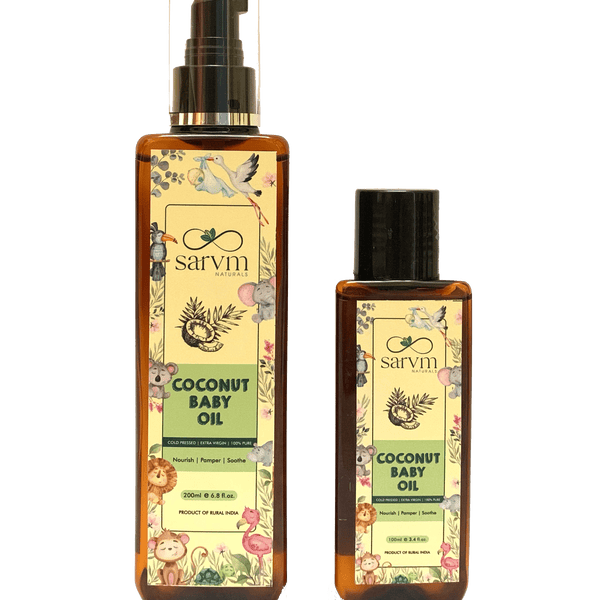
Coconut Baby Oil (200ml) |
Everyday massage, warm-weather use |
Light, fast-absorbing, single-ingredient coconut base |
|
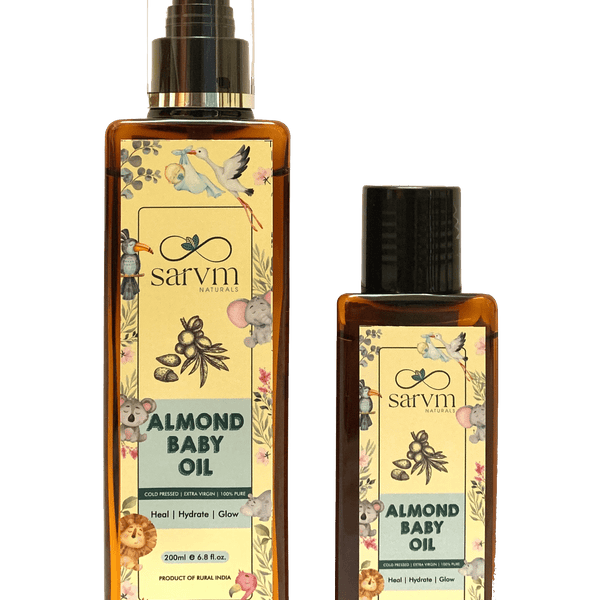
Almond Baby Oil (200ml) |
Drier skin, cooler months |
Richer texture, commonly used across seasons |
|
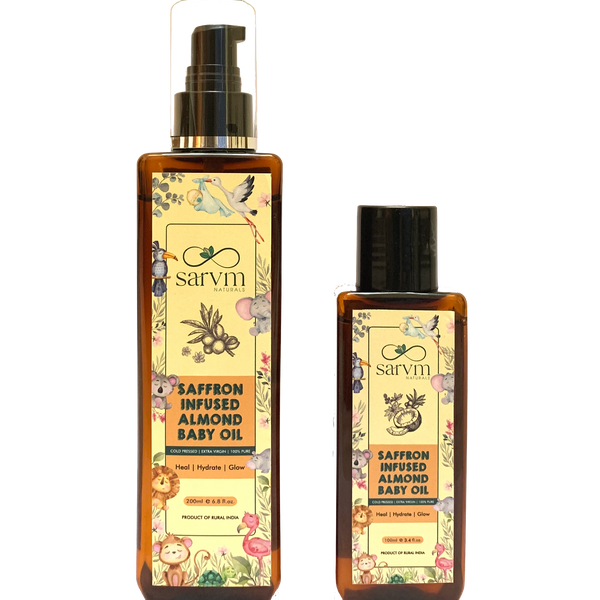
Saffron Almond Baby Oil (200ml) |
Parents wanting a lighter almond-based blend |
Combines almond oil with a saffron-infused formulation |
|
Baby Massage Oil (200ml) |
A ready daily-massage option |
Formulated specifically for infant massage routines |
May work well for daily routines: keep a small bottle by the changing area so the oil is part of the same warm, low-fuss routine every day - consistency matters more than which single oil you pick.
Quick Summary
-
Look for cold-pressed, single-ingredient oils (coconut, almond, or sesame) over anything listing mineral oil or synthetic fragrance.
-
Match the oil to the season - coconut for warmer months, almond or sesame when skin needs more richness.
-
Always patch-test before the first full massage, and avoid the healing umbilical area.
-
Check with a pediatrician if your baby has sensitive or eczema-prone skin before switching oils.
A Trusted Starting Point for Baby Skincare
Choosing a baby oil doesn't need to be complicated - the fewer, more honest the ingredients, the better it usually is for a newborn's skin. Suspire curates natural, cruelty-free baby oils from verified Indian brands, so you can pick between coconut, almond, or a light blend without second-guessing the label.
FAQs
Q. Is coconut oil safe for daily baby massage?
Ans: Yes, for most babies. Coconut oil is light, absorbs well, and is one of the most commonly used massage oils in Indian households. Always patch-test first, and stop use if you notice any redness or irritation on your baby's skin.
Q. How is baby oil different from regular massage oil?
Ans: Baby oil is formulated to be gentler and lighter, without the added fragrances or actives found in adult massage oils. Look specifically for products labelled for infant or baby use, since adult massage oils can be too strong for a newborn's skin.
Q. Can I use the same oil for massage and for pre-diaper protection?
Ans: Some natural oils, like coconut oil, work for both, but a dedicated pre-diaper oil is usually lighter and faster-absorbing. Check the product description to see if it's suited for both uses before assuming.
Q. When should I start massaging my newborn?
Ans: Many parents begin gentle massage a few weeks after birth, once the umbilical cord has healed. If you're unsure, it's worth checking with your pediatrician first, especially for premature babies or babies with skin conditions.
Q. Does a "natural" label guarantee the oil is safe for my baby?
Ans: Not automatically — always check the ingredient list yourself rather than relying on the word "natural" alone. A genuinely gentle baby oil should have a short, recognisable ingredient list without added fragrance or mineral oil.


